Injection-moulded and rotomoulded cases are both designed to protect equipment from impact, moisture, dust, and harsh environments, but they are made using different manufacturing processes that affect their strength, weight, finish, and overall design.
Both types of protective hard cases are widely used for transporting cameras, drones, tools, electronics, medical equipment, firearms, industrial equipment, and specialist instruments.
The best option depends on the level of protection required, the working environment, and the type of equipment being transported.
What is an injection-moulded case?
An injection-moulded case is made by injecting heated plastic into a precision mould under high pressure.
Once the material cools and hardens, the mould opens to create the finished case shape.
Injection moulding is commonly used for:
- Protective hard cases
- Tool cases
- Camera and drone cases
- Electronics storage cases
- Medical equipment cases
This manufacturing process allows for highly consistent shapes, clean finishes, and detailed structural features.
What is a rotomoulded case?
Rotomoulded cases are made using a rotational moulding process.
During manufacturing, plastic material is placed inside a hollow mould that slowly rotates while being heated. As the material melts, it coats the inside of the mould evenly to create the case shape.
This process produces:
- Seamless construction
- Thicker wall sections
- Rounded corners and edges
- Heavy-duty structures
Rotomoulded cases are commonly used for larger or more heavy-duty protective cases designed for harsh environments and demanding industrial use.
What is the main difference between injection-moulded and rotomoulded cases?
The main difference is the way the cases are manufactured and how that affects their structure and performance.
Injection-moulded cases are usually:
- Lighter in weight
- More precise in shape and detail
- Smoother in finish
- More compact and refined
Rotomoulded cases are generally:
- Heavier and thicker
- Designed for maximum durability
- Better suited to extreme impacts
- More rugged in appearance
Both types can provide excellent equipment protection when designed correctly.
Which type of case is stronger?
Rotomoulded cases are often considered stronger in extreme impact situations because of their seamless construction and thicker walls.
The rounded design helps distribute impact forces more evenly across the case.
However, injection-moulded cases can still provide extremely high levels of protection while offering advantages such as:
- Lower weight
- More precise engineering
- Better portability
- Cleaner interior layouts
For many professional applications, injection-moulded protective hard cases provide more than enough durability while being easier to transport.
Which type of case is lighter?
Injection-moulded cases are typically lighter than rotomoulded cases because they use more controlled wall thickness and more precise material distribution.
This makes them popular for:
- Air travel
- Photography and filming equipment
- Drone transport
- Portable electronics
- Field work requiring mobility
Rotomoulded cases are generally heavier because of their thicker walls and more rugged construction.
Do both case types offer waterproof protection?
Yes. Both injection-moulded and rotomoulded cases can be designed to provide waterproof and dustproof protection.
Many professional cases use:
- Rubber gasket seals
- Pressure release valves
- Heavy-duty latches
- Reinforced hinges
These features help protect equipment from:
- Rain and moisture
- Dust and dirt
- Marine environments
- Outdoor conditions
- Industrial work sites
Waterproof performance depends more on the overall case design and sealing system than the moulding method alone.
Which type of case is better for custom foam inserts?
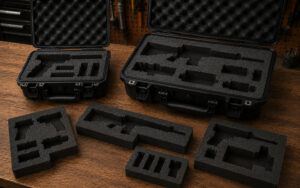
Both types of cases can use custom foam inserts, but injection-moulded cases are often preferred for more precise internal layouts.
This is because injection moulding allows tighter tolerances and more consistent internal dimensions.
Custom foam inserts are commonly used for:
- Cameras and lenses
- Drones and controllers
- Medical equipment
- Firearms and accessories
- Scientific instruments
- Industrial tools
Rotomoulded cases can also support foam inserts effectively, particularly for larger equipment and heavy-duty industrial applications.
Which type of case is better for travel?
Injection-moulded cases are often preferred for travel because they are lighter and easier to carry while still providing excellent protection.
Features commonly found on travel-friendly cases include:
- Pressure release valves
- Carry-on compatible sizes
- Wheels and telescopic handles
- Custom foam interiors
- Secure locking systems
Rotomoulded cases are more commonly used when maximum durability is more important than portability.
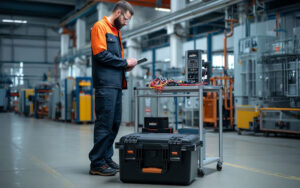
Which case type is best for industrial use?
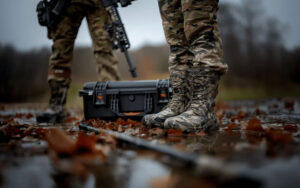
Rotomoulded cases are often chosen for demanding industrial and military-style applications because of their rugged construction and high impact resistance.
They are commonly used in:
- Offshore and marine environments
- Construction and industrial sites
- Military and defence applications
- Heavy equipment transport
- Long-term outdoor storage
Injection-moulded cases are also widely used in professional industries, especially where portability and organised equipment layouts are important.
How do you choose between injection-moulded and rotomoulded cases?
The best choice depends on the equipment being protected and the environment the case will be used in.
An injection-moulded case may be the better choice if you need:
- A lighter case
- Frequent travel and transport
- Precise foam layouts
- A more compact design
A rotomoulded case may be better if you need:
- Maximum durability
- Heavy-duty industrial protection
- Extreme impact resistance
- A rugged outdoor case
Both types of protective hard cases can provide reliable equipment protection when matched correctly to the intended use.