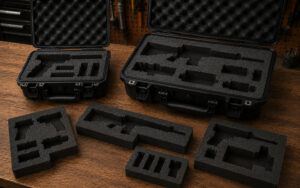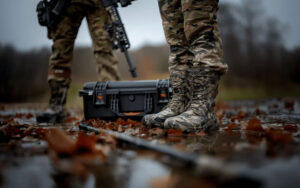
Pressure equalisation is important in waterproof hard cases because it helps prevent damage to both the case and the equipment inside when air pressure changes occur. These changes often happen during air travel, altitude changes, or sudden temperature shifts. Without proper pressure management, sealed protective cases can become difficult to open, place strain on seals and latches, or even warp slightly under pressure.
A pressure equalisation valve allows the case to balance internal and external air pressure while still maintaining its waterproof and dustproof protection. This helps keep valuable equipment safe during transport and storage in demanding environments.
Professional waterproof hard cases are commonly used to protect:
- Camera equipment
- Drones
- Tools
- Electronics
- Medical equipment
- Marine gear
- Sensitive instruments
In the UK, they are frequently used for air travel, offshore work, outdoor photography, motorsport, and transporting equipment in vans between sites.
What is a pressure equalisation valve in a hard case?
A pressure equalisation valve, sometimes called a pressure release valve or breather valve, allows controlled air movement between the inside and outside of a waterproof hard case. Its job is to balance pressure without compromising the case’s waterproof protection.
When a sealed case is exposed to changes in air pressure, the pressure inside the case may no longer match the pressure outside. This can happen when a case is loaded into an aircraft hold, taken up to higher ground, stored in a cold van overnight, or moved from a cold outdoor environment into a warm building.
Without a pressure release valve, the case can become hard to open or place unnecessary strain on its seals, shell, hinges, and latches. A quality waterproof hard case needs to remain sealed against water and dust while still allowing pressure changes to equalise safely.
How do pressure changes damage waterproof hard cases?
Changes in atmospheric pressure can place strain on the seals, latches, and outer shell of a waterproof hard case. If the pressure inside the case cannot equalise properly, the case may become difficult to open, the seals can weaken over time, and the outer shell can distort during transport or temperature changes.
This is especially important for cases used in demanding environments, such as:
- Aircraft holds during commercial flights
- Outdoor photography and filming locations
- Marine and coastal work
- Offshore and renewables industries
- Motorsport paddocks and event sites
- Construction sites and trade vans
- Military, police, and emergency service use
Even strong, impact-resistant protective cases can be affected by repeated pressure changes if they do not have a suitable valve system. Corners, edges, seals, and latch points are often the areas that experience the most stress.
How can pressure build-up damage equipment inside a hard case?
Pressure build-up does not just affect the case itself. It can also put the equipment inside at risk, especially if the outer shell distorts or the contents move during transport.
Sensitive items that may be affected include:
- Camera lenses and photography equipment
- Drone equipment
- Audio and broadcast equipment
- Medical devices
- Testing and measurement instruments
- Optical equipment
- Electronic tools and components
Condensation is another common issue. When a case is moved between cold, damp outdoor conditions and warmer indoor environments, moisture from the air inside the case can settle on equipment surfaces. This can be a particular problem in the UK, where wet weather, cold mornings, and heated indoor spaces often create ideal conditions for condensation.
A pressure equalisation valve helps reduce pressure-related stress and supports better long-term protection for valuable equipment.
How do automatic pressure release valves work?
Automatic pressure release valves are designed to open when the pressure difference between the inside and outside of the case becomes too great. This allows air pressure to equalise in a controlled way.
Once the pressure has balanced, the valve reseals to help maintain the case’s waterproof and dustproof protection. This means the case can cope with changes in air pressure without needing to be manually opened.
In a professional waterproof equipment case, the valve must do two jobs at the same time:
- Allow pressure to equalise safely
- Keep water, dust, and dirt out of the case
This balance is what makes pressure equalisation so important. A well-designed pressure release valve helps protect the case structure, maintain the seal, and reduce the risk of pressure-related damage to the equipment inside.
Why pressure equalisation matters when choosing a hard case
When choosing a waterproof hard case, the pressure equalisation system is an important feature to consider, especially if the case will be used for travel, outdoor work, marine environments, or professional equipment storage.
A high-quality pressure release valve can help:
- Make the case easier to open after flights or altitude changes
- Reduce strain on seals, hinges, and latches
- Help protect equipment from pressure-related movement or stress
- Support waterproof and dustproof protection
- Reduce the impact of temperature changes and condensation
For cameras, drones, tools, electronics, and specialist equipment, pressure equalisation is not just a technical feature. It is part of what makes a rugged hard case reliable in real-world conditions.