Drone cases and camera cases are both designed to protect valuable equipment during storage and transport, but they are built around very different equipment layouts and protection requirements.
Drone cases are usually larger and designed to hold multiple components such as the drone, controller, batteries, propellers, chargers, and accessories. Camera cases are generally more compact, with layouts focused around camera bodies, lenses, memory cards, batteries, and smaller accessories.
Understanding these differences can help you choose the right protective hard case for your equipment and the way you work.
What are the main differences between drone cases and camera cases?
The biggest difference is the way the interior is organised.
Drone cases are designed around complete systems rather than a single item. They often include space for:
- The drone body
- Controllers and monitors
- Multiple batteries
- Chargers and cables
- Propellers and spare parts
- Filters and accessories
Camera cases are usually designed with more compact layouts that focus on:
- Camera bodies
- Lenses
- Flash equipment
- Memory cards
- Batteries and chargers
- Audio accessories
Drone cases often need wider compartments to accommodate folded aircraft, while camera cases are built around lens height, body shape, and quick access to equipment.
Why are drone cases usually larger?
Drones typically require more accessories and supporting equipment than standard camera kits.
A drone operator may need to carry:
- Several flight batteries
- Multiple controllers
- Charging equipment
- Spare propellers
- Tablets or screens
- Maintenance tools
- Landing gear and attachments
This means drone cases often have deeper or wider layouts with modular compartments that can be adjusted as equipment changes.
Camera kits can also become large, especially for professional photographers and videographers, but they are usually organised around smaller individual items such as lenses and camera bodies.
How do protection requirements differ?
Both drone and camera equipment need protection from impact, moisture, vibration, dust, and rough handling, but the most vulnerable components differ.
Drone cases are designed to help protect:
- Gimbal systems
- Propellers
- Electronic flight components
- Controllers and screens
- Flight batteries
Camera cases focus more on protecting:
- Lenses and glass elements
- Camera sensors
- Camera bodies
- Flash equipment
- Audio and recording accessories
Camera lenses often require softer foam protection around delicate surfaces, while drone cases may need firmer support around larger equipment and accessories.
What type of foam inserts work best for drone cases?
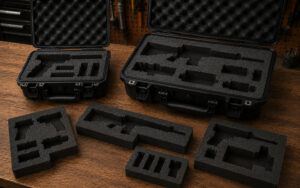
Drone cases often use modular foam layouts or custom-cut foam inserts designed around the exact shape of the drone and accessories.
Common foam solutions include:
- Custom-cut foam: Designed around specific drone models and accessories.
- Pick-and-pluck foam: Allows flexible layouts for changing equipment.
- Divider systems: Adjustable padded compartments for modular setups.
Drone operators often prefer layouts that can be changed over time as equipment is upgraded or expanded.
What type of foam inserts work best for camera cases?
Camera cases usually benefit from more precise layouts designed around individual lenses and camera bodies.
Common foam and interior options include:
- Precision-cut foam inserts: Provide a close fit for cameras and lenses.
- Padded divider systems: Popular for flexible photography kits.
- Soft polyurethane foam: Helps protect delicate lens surfaces and camera finishes.
Many photographers prefer interiors that allow fast access to equipment during shoots while still keeping everything secure during transport.
How do travel requirements differ for drone and camera cases?
Drone cases often need to account for airline battery regulations and additional accessories used during travel.
Important travel considerations for drone cases include:
- Battery storage requirements
- Airline carry-on restrictions
- Protection for gimbals during flights
- Pressure equalisation during altitude changes
Camera cases also need to be suitable for travel, but photographers often prioritise:
- Fast access to equipment
- Compact carry-on sizing
- Lightweight transport
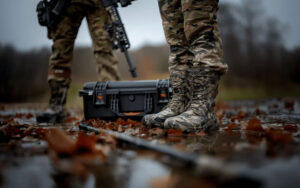
- Weather protection on location
Both types of cases benefit from waterproof seals, pressure release valves, and impact-resistant outer shells.
Why are waterproof and dustproof features important?
Drone and camera equipment are both highly sensitive to moisture, dirt, and dust contamination.
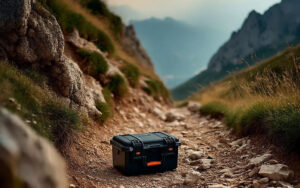
Waterproof and dustproof hard cases help protect equipment when working in:
- Rain and wet weather
- Dusty outdoor environments
- Coastal and marine locations
- Construction or industrial sites
- Cold and damp conditions
This is especially important in the UK, where changing weather and damp conditions can quickly expose equipment to moisture.
What features should you look for in a drone or camera case?
When choosing a protective hard case, important features include:
- Impact-resistant outer shell
- Waterproof and dustproof sealing
- Pressure release valves
- Strong hinges and latches
- Customisable foam interiors
- Comfortable handles or wheels
- Suitable internal dimensions
Drone operators may also benefit from larger modular interiors, while photographers may prefer more compact and lightweight designs.
Which case is best for professional use?
Both drone cases and camera cases can provide professional-level protection when matched correctly to the equipment being transported.
A drone case is usually the better option when carrying:
- Large drones
- Multiple flight batteries
- Controllers and monitors
- Maintenance accessories
A camera case is usually more suitable for:
- Photography kits
- Video production equipment
- Compact lens setups
- Fast-access workflows
The right protective hard case should keep equipment secure, organised, and protected while supporting the way the equipment is used in real-world conditions.