Protective hard cases can interfere with wireless signals, but the level of interference depends on the materials used and the design of the case.
Cases made with metal components or very thick materials can reduce the strength of wireless signals such as Wi-Fi, Bluetooth, GPS, and mobile data. However, many modern protective hard cases are designed to balance equipment protection with reliable wireless performance.
Understanding how different case materials affect wireless signals can help you choose the right case for your equipment and working environment.
Do protective hard cases block wireless signals?
Some protective cases can reduce wireless signal strength because certain materials absorb or reflect radio signals.
This can affect:
- Wi-Fi connections
- Bluetooth devices
- GPS tracking
- Mobile network signals
- Drone controller communication
- Wireless monitoring systems
The amount of interference depends on the thickness of the case, the materials used, and where the wireless antennas are positioned inside the equipment.
Which materials cause the most signal interference?
Metal is one of the biggest causes of wireless signal interference.
Cases with large metal panels or reinforced metal construction can significantly reduce signal strength by blocking or reflecting wireless signals.
Materials that may affect wireless performance include:
- Aluminium
- Steel
- Carbon fibre
- Dense metal-lined materials
- Very thick reinforced plastics
In comparison, most high-quality resin and polypropylene hard cases allow signals to pass through more effectively while still providing strong impact protection.
Do plastic hard cases affect wireless signals?
Most plastic hard cases have far less effect on wireless signals than metal cases.
Protective hard cases made from polypropylene, ABS plastic, or impact-resistant resin materials generally allow Wi-Fi, Bluetooth, and GPS signals to pass through with minimal interference.
However, signal strength may still be reduced slightly if:
- The case walls are particularly thick
- The device antenna is fully enclosed by dense foam
- The equipment is positioned deep inside the case
- Additional metal accessories are stored nearby
In most cases, well-designed plastic hard cases provide a good balance between protection and wireless performance.
How do foam inserts affect wireless connectivity?
Standard foam inserts usually have very little effect on wireless signals.
Foam materials commonly used in protective hard cases include:
- Polyurethane foam
- Polyethylene foam
- EVA foam
These materials are mainly designed for shock absorption and equipment protection rather than signal blocking.
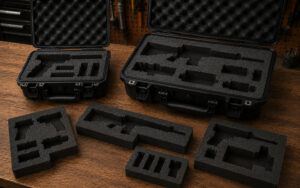
Custom foam inserts can also help improve organisation and prevent equipment from shifting inside the case without significantly affecting wireless performance.
How can you tell if a case is affecting signal strength?
If a protective case is interfering with wireless signals, you may notice:
- Weaker Wi-Fi reception
- Reduced Bluetooth range
- Slower GPS connection
- Dropped mobile signal
- Intermittent drone controller connection
- Slower wireless data transfer
A simple way to test this is to compare signal performance with the device inside and outside the case.
If the signal improves noticeably when the case is opened or the equipment is removed, the case materials or layout may be affecting wireless performance.
Why does equipment placement inside the case matter?
The position of the equipment inside the case can affect how easily wireless signals pass through the case walls.
Wireless antennas are often built into specific areas of the equipment, such as:
- The top of drones
- The rear of tablets and monitors
- The sides of communication equipment
- The upper sections of GPS devices
If these areas are blocked by dense materials, thick foam, or metal accessories, signal strength may be reduced.
Custom foam layouts can help position equipment more effectively to reduce interference.
Do waterproof hard cases affect wireless signals?
Waterproof hard cases can slightly affect wireless signals because of their thicker construction and sealing systems, but most high-quality plastic waterproof cases still allow reliable wireless performance.
Waterproof features such as:
- Rubber gasket seals
- Pressure release valves
- Impact-resistant shells
- Dense foam interiors
are generally designed to protect equipment without heavily blocking wireless communication.
Cases with large amounts of metal reinforcement are more likely to reduce signal strength than standard waterproof resin cases.
What should you look for in a wireless-friendly protective case?
If wireless performance is important, it is best to choose a case designed with non-metallic materials and practical equipment layouts.
Features to look for include:
- Impact-resistant resin or polypropylene construction
- Minimal metal reinforcement
- Customisable foam interiors
- Good equipment spacing
- Suitable internal dimensions
- Pressure release valves
These features help balance strong equipment protection with reliable wireless performance.
Which equipment is most affected by signal interference?
Some types of equipment rely heavily on wireless communication and may be more sensitive to interference inside protective cases.
This includes:
- Drones and controllers
- GPS equipment
- Tablets and mobile devices
- Wireless audio systems
- Bluetooth devices
- Remote monitoring equipment
For this type of equipment, choosing the right case material and interior layout is particularly important.
How do you balance protection and wireless performance?
The best protective hard cases are designed to provide strong impact resistance, waterproof protection, and reliable organisation without unnecessarily blocking wireless signals.
In most situations, a high-quality resin or polypropylene hard case with a well-designed foam interior will provide excellent protection while still allowing reliable wireless connectivity.
For professional users working with drones, electronics, communication systems, and wireless equipment, selecting the right case design can help maintain both equipment safety and operational performance.