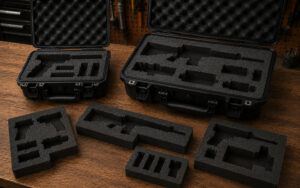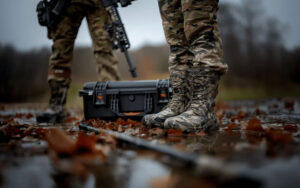
Testing a protective case for waterproof performance involves checking the seals, closures, and overall case condition to confirm that water cannot enter during normal use or temporary submersion.
A truly waterproof hard case should protect equipment from rain, splashes, damp conditions, and short periods of water exposure without allowing moisture inside.
Protective hard cases are commonly used to protect cameras, drones, electronics, tools, medical equipment, firearms, and sensitive instruments in demanding environments.
What does waterproof mean for a protective hard case?
A waterproof hard case is designed to stop water entering the case when it is properly closed and sealed.
Many professional hard cases are tested to IP ratings such as IP67.
An IP67-rated case is designed to provide:
- Complete dust protection
- Protection against temporary water immersion
- Protection during rain and wet conditions
- Resistance to dirt, moisture, and debris
This level of protection is useful for outdoor work, travel, marine environments, photography, industrial use, and transporting sensitive equipment in changing weather conditions.
How do waterproof hard cases keep water out?
Waterproof hard cases use a sealing gasket around the edge of the lid to create a tight barrier when the case is closed.
The waterproof seal works together with:
- Strong locking latches
- Rigid case construction
- Proper lid alignment
- Pressure release valves
When the case is closed correctly, the gasket compresses evenly around the edge to help stop water and dust entering the case.
How can you test a waterproof hard case at home?
There are several simple ways to check if a protective case is maintaining its waterproof seal.
Tissue paper test
Place dry tissue paper or kitchen roll inside the empty case and close it securely.
Then:
- Lightly spray the outside with water or expose it to rain
- Leave the case for several minutes
- Open the case and inspect the tissue for moisture
If the tissue remains completely dry, the seal is likely functioning correctly.
Controlled shallow water test
For a more thorough test:
- Place dry tissue inside the case
- Close and latch the case fully
- Submerge the empty case partially in shallow water
- Leave it submerged briefly
- Remove and inspect the interior carefully
It is important not to test the case with valuable equipment inside until the waterproof seal has been confirmed.
What should you check before testing a case?
Before carrying out any waterproof test, inspect the case carefully for signs of wear or damage.
Check the following areas:
- The rubber gasket around the lid
- Latches and locking points
- Hinges and alignment
- Pressure release valves
- Cracks or damage to the shell
Dirt, sand, dust, or small debris trapped on the seal can reduce waterproof performance.
Why do waterproof hard cases sometimes fail?
Waterproof cases can fail if the seal becomes damaged, worn, dirty, or incorrectly closed.
Common causes of failure include:
- Damaged or compressed gaskets
- Cracked hinges or shell damage
- Dirt trapped on the seal
- Incorrectly latched lids
- Excessive impact damage
- Wear from age or UV exposure
Even a high-quality protective case may lose waterproof performance if it is not maintained properly.
How do pressure release valves affect waterproof protection?
Pressure release valves help equalise air pressure inside the case during altitude or temperature changes while still maintaining waterproof protection.
This is particularly useful when:
- Travelling by air
- Moving between different elevations
- Transporting equipment in changing temperatures
- Moving between cold outdoor and warm indoor environments
A properly functioning pressure valve should allow pressure equalisation without allowing water into the case.
How often should waterproof cases be inspected?
Protective hard cases should be inspected regularly, especially if they are used outdoors or in demanding environments.
General recommendations include:
- Checking seals every 3 to 6 months
- Inspecting the case after heavy impact or drops
- Cleaning the gasket after outdoor use
- Checking hinges and latches regularly
- Testing waterproof performance before major travel
Cases used in marine, industrial, or wet environments may need more frequent inspection.
How do you maintain waterproof protection over time?
Regular maintenance helps preserve the waterproof performance of a protective hard case.
Good maintenance includes:
- Cleaning seals and gasket areas regularly
- Removing dirt, sand, and debris
- Drying the case after wet conditions
- Checking for cracks or damage
- Replacing worn seals if needed
Proper storage also helps extend the life of the waterproof seal. Cases should ideally be stored in dry conditions away from excessive heat or direct sunlight.
Why waterproof testing matters for sensitive equipment
Testing waterproof protection helps reduce the risk of moisture damage to valuable equipment during transport or storage.
This is especially important for:
- Cameras and lenses
- Drones and electronics
- Medical equipment
- Scientific instruments
- Audio and recording equipment
- Testing and measuring devices
Regular inspection and waterproof testing help ensure the case continues to provide reliable protection in real-world conditions.