Protective hard cases are available in a wide range of sizes, from compact cases for small electronics to large industrial cases designed for long or bulky equipment.
Most protective cases fall into a few standard size categories that are commonly used across industries such as photography, drone transport, medical equipment, electronics, industrial tools, and firearms storage.
Understanding common protective case sizes helps you choose a case that provides enough room for both the equipment and the protective foam or compartment system inside.
What are the standard protective hard case size categories?
Protective hard cases are generally grouped into five common size categories.
Small protective cases
Small cases are usually under 12 inches in length and are designed for compact equipment.
They are commonly used for:
- Memory cards and drives
- Small electronics
- Handheld GPS devices
- Compact cameras
- Medical supplies
Typical internal dimensions may range from:
- 7″ × 5″ × 3″
- 10″ × 7″ × 4″
Medium protective cases
Medium cases are among the most commonly used sizes and generally measure between 12 and 18 inches.
They are suitable for:
- Camera kits
- Drones and controllers
- Audio equipment
- Testing equipment
- Tool kits
Typical internal dimensions include:
- 13″ × 9″ × 6″
- 16″ × 12″ × 7″
- 18″ × 13″ × 7″
Large protective cases
Large cases usually range from 18 to 24 inches and are designed for larger professional equipment setups.
They are commonly used for:
- Professional camera systems
- Lighting equipment
- Industrial electronics
- Medical instruments
- Larger drone systems
Typical internal dimensions may include:
- 20″ × 15″ × 8″
- 22″ × 17″ × 9″
Extra-large protective cases
Extra-large cases generally measure between 24 and 30 inches or more.
These are often used for:
- Large industrial tools
- Broadcast equipment
- Large drones
- Surveying equipment
- Specialist engineering equipment
Many extra-large cases also include wheels and telescopic handles to make transport easier.
Specialty and long protective cases
Specialty cases are designed for long or unusually shaped equipment.
These are commonly used for:
- Firearms and rifles
- Tripods and stands
- Fishing equipment
- Lighting poles
- Surveying gear
Some long cases exceed 50 inches in length depending on the application.
Why do internal dimensions matter more than external dimensions?
When choosing a protective case, internal dimensions are usually more important because they show the actual usable storage space inside the case.
External dimensions include:
- The outer shell
- Handles
- Latches
- Wheels
- Wall thickness
A thick protective shell reduces the available internal space, so relying only on external measurements can result in a case that is too small for the equipment.
How much extra space should you allow inside a case?
It is important to leave enough room for foam inserts, dividers, and shock protection around the equipment.
General recommendations include:
- 25 mm of foam around smaller equipment
- 50 mm or more around fragile or heavy equipment
- Additional space for cables and accessories
- Clearance for handles, lenses, or mounted attachments
Equipment should fit securely without being forced into the case.
What are the most common case sizes for camera equipment?
Camera equipment is usually stored in medium-sized protective cases.
Popular sizes often include:
- 13″ × 9″ × 6″
- 16″ × 12″ × 7″
- 18″ × 13″ × 7″
These sizes typically provide enough room for:
- Camera bodies
- Several lenses
- Batteries and chargers
- Memory cards
- Small accessories
What are the most common case sizes for drones?
Drone cases are often slightly larger because they need space for:
- The drone body
- Controllers
- Multiple batteries
- Chargers and cables
- Propellers and accessories
Common drone case sizes range from:
- 16″ × 12″ × 7″
- 20″ × 15″ × 8″
Larger professional drones may require extra-large or custom-sized cases.
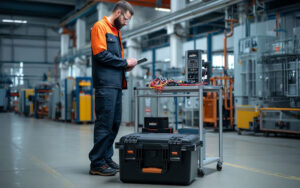
What are the most common case sizes for industrial equipment?
Industrial equipment often requires larger and deeper cases because of heavier components and more demanding protection requirements.
Common industrial case sizes include:
- 22″ × 17″ × 9″
- 24″ × 18″ × 10″
- 30″ × 20″ × 12″
These cases are frequently used for:
- Testing equipment
- Power tools
- Surveying equipment
- Electronics and instrumentation
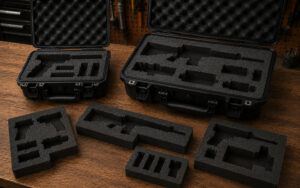
How do custom foam inserts affect case sizing?
Custom foam inserts reduce the available storage space slightly because the foam itself takes up room inside the case.
Foam inserts are important because they:
- Reduce equipment movement
- Improve impact protection
- Protect delicate components
- Keep equipment organised
When planning a custom foam layout, it is important to account for both the equipment dimensions and the protective foam thickness.
What features are common on larger protective cases?
Larger cases often include additional transport and protection features.
Common features include:
- Wheels and telescopic handles
- Pressure release valves
- Heavy-duty latches
- Waterproof gasket seals
- Stackable designs
- Custom foam interiors
These features help improve portability and long-term equipment protection.
How do you choose the right protective case size?
The best case size depends on:
- The dimensions of the equipment
- The amount of protective foam required
- The accessories being stored
- The transport environment
- Future equipment expansion
Choosing a case that is too small can reduce protection, while an oversized case may allow unnecessary movement if the interior is not organised properly.
A well-sized protective hard case should provide secure protection, efficient organisation, and enough room for safe transport without excessive empty space.