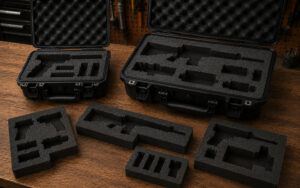
The best foam density for fragile equipment usually falls between 1.5 and 4 pounds per cubic foot (PCF), depending on the size, weight, and sensitivity of the equipment being protected.
Choosing the correct foam density is important because it affects how well the foam absorbs shock, supports the equipment, and prevents damage during transport or storage.
Foam that is too soft may compress too easily under heavier items, while foam that is too dense may not provide enough cushioning for delicate components.
What does foam density mean?
Foam density refers to the weight of the foam within a specific volume, usually measured in pounds per cubic foot (PCF).
Density affects:
- Shock absorption
- Compression resistance
- Long-term durability
- Weight support
- Overall equipment protection
Higher-density foam is firmer and more supportive, while lower-density foam is softer and more flexible.
Why does foam density matter for fragile equipment?
Fragile equipment often contains delicate components that can be damaged by impact, vibration, or pressure during transport.
Correct foam density helps:
- Absorb impacts more effectively
- Reduce movement inside the case
- Support the equipment evenly
- Prevent pressure damage
- Maintain protection over time
The goal is to create a balance between cushioning and support.
What foam density is best for lightweight fragile equipment?
Lightweight and delicate equipment usually benefits from lower-density foam between 1.5 and 2.5 PCF.
This includes equipment such as:
- Cameras and lenses
- Optical equipment
- Small electronics
- Audio equipment
- Sensitive instruments
Softer foam helps absorb vibration and reduces pressure on delicate surfaces and components.
What foam density is best for heavier fragile equipment?
Heavier equipment usually requires medium- to high-density foam between 3 and 4 PCF.
This provides better support and helps prevent the equipment from sinking too deeply into the foam.
Higher-density foam is commonly used for:
- Large camera setups
- Drones and controllers
- Medical equipment
- Scientific instruments
- Industrial electronics
- Testing equipment
Without enough density, heavier equipment may compress the foam too much and lose impact protection.
What types of foam are used in protective hard cases?
Several different foam materials are commonly used in protective cases.
Polyethylene foam
Polyethylene foam is a high-density closed-cell foam known for durability and strong impact resistance.
It is commonly used for:
- Industrial tools
- Heavy electronics
- Drone equipment
- Military and industrial applications
It also offers good moisture resistance and long-term durability.
Polyurethane foam
Polyurethane foam is softer and more flexible.
It is often used for:
- Camera lenses
- Delicate electronics
- Precision instruments
- Sensitive surfaces
This foam provides gentle cushioning and helps reduce scratches and surface damage.
EVA foam
EVA foam offers firm support with clean and precise cutting characteristics.
It is commonly used for:
- Custom presentation cases
- Professional equipment layouts
- Complex foam insert designs
- High-end equipment protection
EVA foam maintains its shape well and is popular for custom CNC-cut inserts.
What is the difference between open-cell and closed-cell foam?
Closed-cell foam contains sealed air pockets that resist moisture and provide firmer support.
Closed-cell foam is commonly preferred for protective hard cases because it:
- Resists water absorption
- Provides stronger structural support
- Maintains its shape longer
- Offers better impact resistance
Open-cell foam is softer and more flexible but can absorb moisture and compress more easily over time.
It is often used for softer cushioning applications rather than heavy-duty transport protection.
How does foam thickness affect protection?
Foam thickness works together with foam density to create effective protection.
Thicker foam allows greater shock absorption because it gives the equipment more cushioning distance during impact.
General recommendations include:
- At least 25 mm of foam around most equipment
- 50 mm or more for highly sensitive or heavy equipment
- Additional padding around fragile components
Using the correct density with adequate thickness helps improve overall impact protection.
How do you choose the right foam for your equipment?
The best foam depends on:
- The weight of the equipment
- How fragile it is
- How often it is transported
- The transport environment
- The level of impact protection required
Equipment used in industrial environments or frequent travel may require firmer and more durable foam than equipment stored mainly indoors.
Why are custom foam inserts useful for fragile equipment?
Custom foam inserts help distribute pressure evenly around the equipment while reducing movement inside the case.
They also help:
- Improve organisation
- Protect delicate components
- Reduce vibration during transport
- Prevent equipment collisions inside the case
- Create a more professional layout
Professional custom foam inserts are often designed using precision cutting or CNC machinery to achieve accurate fitment and reliable long-term protection.
Why foam selection matters for protective hard cases
The foam inside a protective hard case plays a major role in protecting valuable equipment from damage.
Choosing the correct foam density helps ensure that fragile equipment remains secure, supported, and protected during transport, storage, and everyday use.
For cameras, drones, electronics, medical equipment, scientific instruments, and other sensitive equipment, selecting the right foam is just as important as choosing the right protective hard case itself.