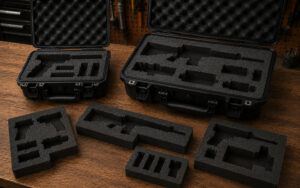
Safe cleaning products for hard protective cases include mild dish soap solutions, isopropyl alcohol at 70% concentration, and specialist plastic cleaners designed for durable polymers and rubber seals.
These products clean effectively without damaging:
- Waterproof gasket seals
- Impact-resistant shells
- Protective coatings
- Foam interiors
- Pressure equalisation valves
Using the wrong cleaning chemicals can weaken waterproof protection and reduce long-term case durability.
What cleaning products are safest for hard cases?
The safest products are gentle, non-abrasive cleaners that do not react with plastic or rubber components.
Mild dish soap and warm water
This is the safest general-purpose cleaning solution for most hard cases.
A small amount of dish soap mixed with warm water removes:
- Dirt
- Dust
- Grease
- Outdoor residue
without harming seals or shell materials.
70% isopropyl alcohol
Isopropyl alcohol at 70% concentration is safe for disinfecting hard cases and sanitising high-contact areas.
It evaporates quickly and does not usually damage:
- Polypropylene shells
- NK-7 resin
- Most foam interiors
when used correctly.
Specialist plastic cleaners
Plastic-safe cleaners designed for automotive or marine applications work well for professional protective cases.
These products are formulated to clean durable polymers without causing:
- Stress cracking
- Surface dulling
- Chemical degradation
Which cleaning products should never be used on hard cases?
Several common household chemicals can permanently damage protective cases.
Bleach
Bleach damages rubber gasket seals and can cause them to:
- Dry out
- Crack
- Lose flexibility
This compromises waterproof performance.
Ammonia-based cleaners
Glass cleaners and ammonia products may cause stress fractures in polypropylene shells.
Over time, this weakens impact resistance.
Acetone and strong solvents
Acetone, paint thinners, and similar solvents can:
- Melt plastics
- Destroy seals
- Damage foam materials
These products should never be used on protective equipment cases.
Abrasive cleaners
Scouring pads and abrasive compounds scratch surfaces and damage protective coatings.
Scratches can also trap dirt and moisture over time.
How do you properly clean a waterproof hard case?
Step 1: Remove all equipment
Take out:
- Electronics
- Foam inserts
- Accessories
- Batteries
before cleaning begins.
Step 2: Remove loose dirt
Shake out dust and debris.
Use a soft brush or microfiber cloth to clean corners and seal channels.
Step 3: Wash with mild soap solution
Use a damp microfiber cloth with warm soapy water.
Wipe:
- The shell exterior
- Interior surfaces
- Handles
- Latches
Avoid soaking the case unnecessarily.
Step 4: Clean gasket seals carefully
The gasket is critical for waterproof performance.
Use a soft cloth to remove:
- Dirt
- Sand
- Salt residue
from the gasket and sealing channel.
Step 5: Dry completely
Leave the case open in a ventilated area until fully dry.
Moisture trapped inside the case may cause:
- Mould growth
- Odours
- Seal deterioration
Can you disinfect hard protective cases safely?
Yes. Hard cases can be disinfected safely using:
- 70% isopropyl alcohol
- Plastic-safe disinfectants
Apply disinfectants using a cloth rather than spraying directly onto seals or valves.
This reduces the risk of chemical pooling inside sensitive areas.
What is the difference between cleaning and disinfecting?
Cleaning removes:
- Dirt
- Dust
- Grease
- Debris
Disinfecting kills:
- Bacteria
- Viruses
- Microorganisms
For best results, clean the case first before disinfecting it.
Dirt and oils can reduce disinfectant effectiveness if not removed beforehand.
How should foam inserts be cleaned?
Foam inserts require gentle cleaning methods.
Closed-cell foam
Closed-cell foam can usually be wiped with:
- Mild soap solution
- Damp cloths
because it resists moisture absorption.
Open-cell foam
Open-cell foam absorbs water more easily and should be cleaned carefully.
Use minimal moisture and allow extended drying time.
Custom foam inserts
Precision-cut foam should be handled carefully to avoid damaging:
- Edges
- Compartments
- Protective fitment areas
Why is seal maintenance important after cleaning?
Waterproof hard cases rely on gasket flexibility and proper compression.
After cleaning, seals should remain:
- Clean
- Flexible
- Free from cracks
Some professionals apply silicone-based gasket lubricant occasionally to help maintain seal condition.
This can improve long-term waterproof performance.
How often should hard cases be cleaned?
Cleaning frequency depends on usage conditions.
Outdoor or industrial use
Cases exposed to:
- Mud
- Saltwater
- Dust
- Chemicals
should be cleaned after heavy exposure.
General professional use
Routine cleaning every few months is usually sufficient for office or studio environments.
Medical or shared equipment
Cases used in shared or sensitive environments may require regular disinfecting.
Why proper cleaning matters for protective cases
Correct cleaning methods help maintain:
- Waterproof protection
- Dustproof sealing
- Impact resistance
- Foam performance
- Long-term durability
Professional hard cases are designed to withstand demanding environments, but proper maintenance ensures they continue protecting valuable equipment reliably over time.