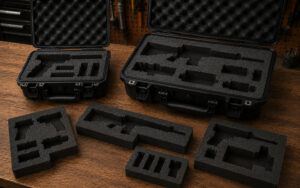
Sensitive equipment typically requires between 25 mm and 50 mm of protective foam padding on all sides, depending on the weight, fragility, and transport conditions involved.
The correct amount of padding helps absorb impacts, reduce vibration, and prevent equipment movement inside a protective hard case.
Choosing the right foam thickness and density is important for protecting cameras, drones, electronics, medical equipment, scientific instruments, audio equipment, and other delicate gear during storage or transport.
Why is proper padding important for sensitive equipment?
Protective padding helps reduce the risk of damage caused by:
- Impact during transport
- Vibration and movement
- Pressure from other equipment
- Accidental drops
- Rough handling
Without enough padding, sensitive equipment may shift inside the case or absorb too much direct impact force.
How much padding is recommended for sensitive electronics?
Most delicate electronics and optical equipment benefit from at least 25 mm of foam padding around all sides.
This commonly includes:
- Cameras and lenses
- Drones and controllers
- Laptops and tablets
- Audio equipment
- Scientific instruments
- Medical devices
Highly fragile or expensive equipment may require 38 mm to 50 mm of foam for additional shock absorption.
Does equipment weight affect padding requirements?
Yes. Heavier equipment usually requires thicker or denser foam because it generates greater force during impacts.
General recommendations include:
- Lightweight gear: 12 mm to 25 mm padding
- Medium-weight equipment: 25 mm to 38 mm padding
- Heavy or highly sensitive equipment: 50 mm or more
If the foam is too thin for the equipment weight, it may compress too much during impact and reduce protection.
What foam types work best for sensitive gear?
Different foam materials offer different levels of support and cushioning.
Polyethylene foam
Polyethylene foam is a firm, closed-cell foam with strong impact resistance.
It is commonly used for:
- Industrial electronics
- Drone equipment
- Testing equipment
- Heavy tools
It offers good long-term durability and moisture resistance.
Polyurethane foam
Polyurethane foam is softer and better suited to delicate surfaces.
It is commonly used for:
- Camera lenses
- Audio equipment
- Precision instruments
- Sensitive electronics
This foam provides gentle cushioning and helps reduce scratches and pressure damage.
EVA foam
EVA foam offers firm support with precise shaping and clean edges.
It is commonly used for:
- Custom presentation cases
- Professional equipment layouts
- High-end electronics
- Complex foam inserts
Should you use soft foam or firm foam?
The correct foam firmness depends on the equipment being protected.
Softer foam is usually better for:
- Fragile surfaces
- Lightweight electronics
- Optical equipment
Firmer foam is usually better for:
- Heavy equipment
- Industrial tools
- Frequent transport
- Rugged outdoor environments
Many professional foam inserts combine multiple foam densities to balance cushioning and support.
How much space should be left between multiple items?
When storing several pieces of equipment inside the same case, there should be enough foam between items to prevent contact during transport.
A minimum spacing of around 12 mm to 25 mm of foam between items is generally recommended.
More spacing may be required for:
- Heavy equipment
- Delicate lenses and screens
- Items with sharp edges
- Equipment exposed to rough transport
Good spacing helps reduce the risk of equipment colliding inside the case.
How does transport type affect padding requirements?
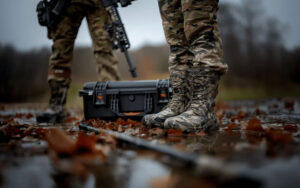
The transport environment has a major effect on the amount of padding required.
Cases exposed to:
- Air travel
- Off-road transport
- Industrial environments
- Marine conditions
- Frequent loading and unloading
may require thicker or denser foam than equipment stored mainly indoors.
Rougher transport conditions increase the likelihood of vibration, drops, and impact forces.
What is the advantage of custom foam inserts?
Custom foam inserts provide a precise fit around the equipment, helping distribute pressure evenly and minimise movement.
Benefits include:
- Improved shock absorption
- Reduced movement inside the case
- Better organisation
- Protection for delicate components
- More professional presentation
Professional custom foam inserts are often created using CNC cutting technology for accurate fitment and clean finishes.
Can too much padding be a problem?
Yes. Excessive padding can make equipment difficult to remove and may create unnecessary pressure on fragile components.
Padding should:
- Hold the equipment securely
- Allow easy removal
- Distribute pressure evenly
- Avoid tight pressure points
A properly fitted foam insert should feel secure without forcing the equipment into place.
Why closed-cell foam is commonly preferred
Closed-cell foam is widely used in protective hard cases because it:
- Resists moisture absorption
- Maintains its shape longer
- Provides stronger impact resistance
- Offers better long-term durability
This makes it particularly suitable for outdoor, industrial, marine, and professional transport applications.
How do you know if the padding is sufficient?
A properly padded case should prevent the equipment from shifting when the case is moved.
To test the fit:
- Close the case fully
- Gently move or tilt the case
- Listen for movement or rattling
- Check that no components are under excessive pressure
The equipment should remain secure and stable without visible compression damage to the foam.
Why proper padding matters in protective hard cases
The amount and type of padding inside a protective hard case directly affects how well sensitive gear is protected during transport and storage.
Choosing the correct foam density, thickness, and layout helps reduce the risk of impact damage, vibration, moisture exposure, and equipment movement.
For valuable or delicate equipment, properly designed foam protection is just as important as the strength of the case itself.