The largest protective hard cases available can exceed 50 inches in internal length and are designed for transporting oversized, heavy, or specialist equipment.
These large protective cases are commonly used for industrial equipment, firearms, military gear, lighting systems, surveying equipment, broadcast equipment, and other long or bulky items that require secure transport and environmental protection.
While larger cases do exist for specialist applications, most professional protective hard cases generally fall within the 30-inch to 50-inch size range.
How large can protective hard cases get?
Some of the largest commercially available protective cases offer internal dimensions exceeding:
- 50 inches in length
- 20 inches in width
- 10 inches in depth
Long protective cases designed for specialist equipment may be even larger depending on the manufacturer and intended application.
These oversized cases are typically built with reinforced structures to maintain strength and waterproof sealing across the larger surface area.
What types of equipment require very large protective cases?
Large protective hard cases are commonly used for transporting:
- Firearms and rifles
- Lighting stands and tripods
- Broadcast and film equipment
- Surveying equipment
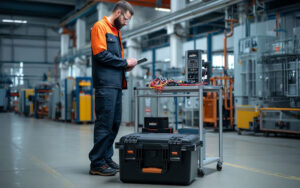
- Industrial tools
- Scientific instruments
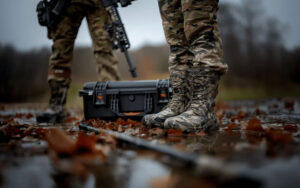
- Military and tactical equipment
- Large drones and accessories
- Audio and DJ equipment
Many industries rely on oversized cases to protect expensive equipment from impact, moisture, dust, and rough transport conditions.
What limits the maximum size of protective cases?
Several factors limit how large protective hard cases can realistically become.
Material strength
Larger cases require stronger shells and reinforced walls to prevent flexing or structural weakness.
As case size increases, manufacturers often need:
- Thicker walls
- Reinforced corners
- Additional latches
- Stronger hinge systems
Weight and handling
Very large cases can become difficult to carry or move once loaded with equipment.
Heavy-duty wheels and telescopic handles are usually required for oversized models.
Transport restrictions
Vehicle dimensions, freight regulations, airline restrictions, and storage limitations all influence practical case sizing.
Manufacturers often design large cases to remain compatible with common transport systems where possible.
Can large protective cases still be waterproof?
Yes. Large protective hard cases can still maintain IP67-rated waterproof and dustproof protection when designed correctly.
However, larger cases require more advanced sealing systems because:
- Longer seals are harder to compress evenly
- Larger lids create more pressure on hinges and latches
- Temperature changes affect larger surfaces more significantly
To maintain waterproof performance, oversized cases often include:
- Heavy-duty gasket seals
- Multiple latches
- Pressure release valves
- Reinforced hinge systems
Why are pressure release valves important in large cases?
Pressure release valves help equalise internal air pressure during:
- Air travel
- Altitude changes
- Temperature fluctuations
This is especially important for large waterproof cases because bigger internal air volumes create greater pressure differences.
Without pressure equalisation, oversized waterproof cases may become difficult to open or place unnecessary stress on seals and latches.
How heavy are large protective cases?
Large protective cases can become extremely heavy once loaded with equipment.
Depending on the size and construction, empty oversized cases may weigh:
- 10 kg to 20 kg or more
When fully loaded, some professional cases can exceed safe single-person lifting limits.
Because of this, many large cases include:
- Heavy-duty wheels
- Telescopic pull handles
- Side carry handles
- Stackable designs
How are oversized cases transported safely?
Transporting large protective cases safely requires proper weight distribution and handling.
Common transport methods include:
- Rolling wheel systems
- Two-person lifting
- Transport trolleys
- Vehicle loading ramps
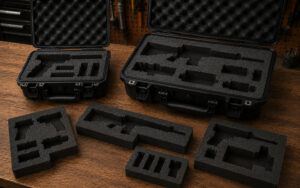
Inside the case, custom foam inserts help distribute equipment weight evenly and reduce movement during transport.
What interior layouts are used in large protective cases?
Oversized cases often use custom foam interiors or modular divider systems depending on the equipment being stored.
Custom foam inserts
Custom foam inserts are commonly used for:
- Broadcast equipment
- Precision instruments
- Firearms
- Large drones
- Medical equipment
These inserts provide precise support and reduce movement during transport.
Divider systems
Divider systems are more flexible and are often used when equipment configurations change regularly.
They are common in:
- Lighting kits
- Audio equipment transport
- General production equipment
What are the advantages of large protective hard cases?
Large protective hard cases provide several important benefits for professional equipment transport.
- Strong impact protection
- Waterproof and dustproof sealing
- Improved equipment organisation
- Safer long-distance transport
- Reduced risk of equipment damage
- Better protection in harsh environments
They are especially valuable for expensive or sensitive equipment that would be difficult or costly to replace.
Are there disadvantages to oversized protective cases?
Large protective cases can also create some practical challenges.
Potential disadvantages include:
- Higher purchase cost
- Increased weight
- More difficult handling
- Greater storage space requirements
- Potential airline or freight restrictions
Choosing the correct size is important to balance protection with usability and transport practicality.
How do you choose the right large protective case?
When selecting an oversized protective case, consider:
- Equipment dimensions
- Total equipment weight
- Foam thickness requirements
- Transport conditions
- Vehicle or airline restrictions
- Storage space availability
The case should provide enough room for proper protective padding without leaving excessive empty space that allows equipment movement.
Why oversized protective cases are important for professional equipment
Large protective hard cases allow professionals to transport bulky, valuable, and sensitive equipment safely in demanding environments.
With reinforced construction, waterproof sealing, pressure equalisation systems, and custom interiors, oversized cases provide reliable protection for equipment that cannot risk damage during storage or transport.