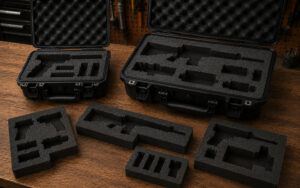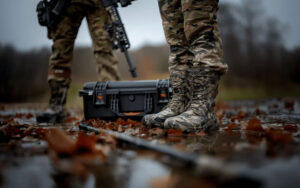
IP67 waterproof cases are designed to remain underwater for up to 30 minutes at depths of up to 1 metre under controlled testing conditions.
This level of protection helps keep sensitive equipment safe from temporary water exposure such as:
- Heavy rain
- Water splashes
- Accidental drops into water
- Short-term submersion
However, IP67-rated cases are not designed for prolonged underwater use or deep-water diving applications.
What does IP67 actually mean?
The IP rating system measures how well a product resists dust and water ingress.
In an IP67 rating:
- 6: Complete protection against dust ingress
- 7: Protection against temporary immersion in water up to 1 metre deep for up to 30 minutes
This means the case should prevent water entering during short-term submersion under normal testing conditions.
How is IP67 waterproof testing performed?
IP67 testing is carried out under controlled laboratory conditions.
During testing:
- The case is fully sealed
- The case is submerged in fresh water
- The depth does not exceed 1 metre
- The test lasts for 30 minutes
After testing, there should be no harmful water ingress inside the case.
Can IP67 cases stay underwater longer than 30 minutes?
Some high-quality cases may continue performing beyond the minimum IP67 requirement, but the certified protection officially covers only:
- Up to 30 minutes
- At depths of up to 1 metre
Longer exposure increases the risk of seal failure, pressure-related leaks, or moisture ingress.
For reliable equipment protection, it is best to stay within the certified limits.
What happens if an IP67 case goes deeper than 1 metre?
Water pressure increases as depth increases.
At greater depths, pressure places more force on:
- Gasket seals
- Latches
- Pressure valves
- Case joints
IP67-rated cases are not tested for deeper submersion, so waterproof performance cannot be guaranteed beyond the certified depth.
Are IP67 cases suitable for marine environments?
Yes, IP67 cases are commonly used around:
- Boats
- Harbours
- Rivers
- Wet outdoor environments
They provide excellent protection against rain, splashes, and accidental immersion.
However, saltwater introduces additional risks because it is more corrosive than freshwater.
How does saltwater affect waterproof cases?
Saltwater can accelerate wear on:
- Gaskets
- Metal hardware
- Pressure release valves
- Latch mechanisms
After exposure to saltwater, protective cases should be rinsed with clean fresh water and dried thoroughly.
This helps maintain long-term waterproof performance.
What factors affect underwater performance?
Several factors can affect how well a waterproof case performs underwater.
Seal condition
Damaged or dirty gaskets can compromise waterproof protection.
Even small amounts of debris can prevent proper sealing.
Temperature changes
Rapid temperature changes can affect internal air pressure and gasket compression.
This may increase stress on the sealing system.
Case age and wear
Repeated use, UV exposure, impacts, and poor maintenance can reduce waterproof performance over time.
Latch closure
Improperly closed latches are one of the most common causes of water ingress.
All latches should be fully secured before exposure to water.
What role do pressure release valves play?
Pressure release valves help equalise internal air pressure during:
- Altitude changes
- Temperature fluctuations
- Air travel
These valves are designed to maintain waterproof integrity while preventing excessive pressure build-up inside the case.
They are especially important in waterproof hard cases used in changing environmental conditions.
How do you maintain an IP67 waterproof case?
Regular maintenance helps preserve waterproof performance.
Recommended maintenance includes:
- Cleaning gasket seals regularly
- Removing sand and debris
- Checking for cracks or damage
- Inspecting latches and hinges
- Rinsing after saltwater exposure
Gaskets should remain flexible and free from contamination to maintain proper sealing pressure.
What equipment benefits most from IP67 protection?
IP67-rated protective cases are commonly used to protect:
- Cameras and lenses
- Drones
- Laptops and electronics
- Audio equipment
- Scientific instruments
- Medical equipment
- Industrial tools
These cases help reduce the risk of water damage during transport and field use.
Are IP67 cases suitable for underwater photography or diving?
No. IP67 cases are not designed for prolonged underwater operation or diving applications.
Professional diving equipment usually requires much higher waterproof ratings and specialised pressure-resistant housings.
IP67 protection is intended for temporary immersion rather than continuous underwater use.
Why IP67 cases are valuable for equipment protection
IP67-rated protective hard cases provide reliable protection against dust, rain, splashes, and temporary submersion.
When properly maintained and used within their certified limits, they help keep valuable equipment protected in demanding environments where moisture exposure is a genuine risk.