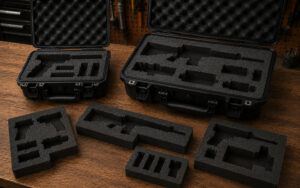
Anti-static hard cases are designed to protect sensitive electronic equipment from electrostatic discharge (ESD) during transport and storage.
Professional anti-static cases use specialised materials and grounding features that safely control static electricity buildup before it can damage delicate components.
These protective features are especially important for:
- Circuit boards
- Medical equipment
- Test instruments
- Computer hardware
- Sensors
- Precision electronics
Why is anti-static protection important in hard cases?
Static electricity can build up naturally through:
- Handling equipment
- Transport vibration
- Foam friction
- Movement inside the case
When static charges discharge suddenly into sensitive electronics, they can cause:
- Permanent component failure
- Data corruption
- Reduced equipment lifespan
- Intermittent faults
Some ESD damage is immediate, while other damage develops slowly over time and reduces long-term reliability.
Anti-static hard cases help prevent these problems by safely dissipating electrical charges before they reach the equipment.
What are the most important anti-static features in hard cases?
Professional anti-static cases should include:
- Conductive or static dissipative shell materials
- ESD-safe foam inserts
- Grounding points
- Conductive gaskets
- Controlled surface resistance ratings
These features work together to prevent dangerous static buildup inside the case.
What are conductive case materials?
Conductive materials allow electrical charges to flow safely away from sensitive equipment.
These materials are commonly made using:
- Carbon-filled polymers
- Conductive plastics
- Specialised composite materials
Conductive cases rapidly equalise electrical charges, helping protect highly sensitive electronics.
They are often used in:
- Electronics manufacturing
- Military applications
- Medical technology
- Aerospace industries
What are static dissipative materials?
Static dissipative materials release electrical charges more gradually than fully conductive materials.
This controlled discharge reduces the risk of sudden electrical spikes while still preventing dangerous static buildup.
Static dissipative cases are commonly used for:
- General electronics
- Test equipment
- Commercial technical equipment
- Sensitive field instruments
Many professional anti-static cases use static dissipative materials because they provide strong protection while remaining practical for everyday use.
Why are anti-static foam inserts important?
Standard foam can generate static electricity through friction when equipment moves during transport.
Anti-static foam is specially designed to minimise this risk.
Professional anti-static foam inserts:
- Reduce static buildup
- Protect delicate surfaces
- Absorb impacts
- Prevent equipment movement
Common anti-static foam materials include:
- Polyethylene foam
- EVA foam
- Conductive polyurethane foam
Polyethylene foam
This provides:
- High durability
- Moisture resistance
- Strong impact absorption
It is often used for industrial electronics and heavy technical equipment.
EVA foam
EVA foam offers:
- Excellent dimensional stability
- Precision CNC cutting
- Firm support
It is widely used for professional custom foam layouts.
Conductive polyurethane foam
This softer foam protects delicate electronic surfaces while maintaining anti-static performance.
What role do grounding systems play in anti-static cases?
Grounding systems safely direct electrical charges away from equipment.
Professional anti-static hard cases may include:
- Grounding studs
- Conductive hardware
- Wrist strap connections
- Metal grounding points
These features are especially important in:
- Clean rooms
- Electronics manufacturing
- Repair environments
- Laboratory settings
What anti-static standards should hard cases meet?
Professional anti-static hard cases should comply with recognised ESD standards.
The most common include:
- ANSI/ESD S20.20
- IEC 61340
- MIL-STD specifications
ANSI/ESD S20.20
This is one of the most widely recognised standards for ESD protection systems.
It defines:
- Surface resistance ranges
- Testing procedures
- Grounding requirements
- Material performance standards
IEC 61340
This international standard covers electrostatic protection in industrial and commercial environments.
Military standards
Military-grade anti-static cases often undergo additional testing for:
- Extreme temperatures
- Impact resistance
- Environmental exposure
How do waterproof and anti-static features work together?
Professional protective cases often combine:
- Anti-static protection
- IP67 waterproof sealing
- Dustproof construction
- Impact resistance
These features must work together without compromising performance.
Professional waterproof anti-static cases use:
- Conductive gaskets
- Pressure equalisation valves
- Precision sealing systems
This allows the case to maintain environmental protection while still controlling static electricity safely.
How do you maintain anti-static hard cases properly?
Anti-static protection requires regular maintenance.
Keep cases clean
Use ESD-safe cleaning products rather than standard household cleaners.
Some chemicals can damage conductive materials or leave insulating residues.
Inspect foam regularly
Replace anti-static foam if it shows:
- Cracking
- Compression damage
- Contamination
- Wear
Check grounding systems
Inspect grounding points and conductive hardware for:
- Corrosion
- Damage
- Loose fittings
Avoid extreme storage conditions
Long-term exposure to:
- UV light
- Heat
- Humidity
can degrade anti-static performance over time.
Which industries use anti-static protective cases?
Anti-static hard cases are widely used in:
- Electronics manufacturing
- Aerospace
- Military operations
- Medical technology
- Telecommunications
- Scientific research
These industries transport sensitive electronics that may be damaged by even small electrostatic discharges.
Why professional anti-static hard cases matter
Cheap or poorly designed cases may actually increase static electricity risk rather than reduce it.
Professional anti-static hard cases use engineered materials and controlled manufacturing standards to protect valuable equipment safely.
Manufacturers such as HUSK Cases offer professional protective solutions designed for sensitive equipment transport, combining:
- Impact resistance
- Waterproof sealing
- Custom foam interiors
- Professional-grade case construction
For high-value electronics and precision instruments, properly designed anti-static protection is an essential part of long-term equipment reliability.