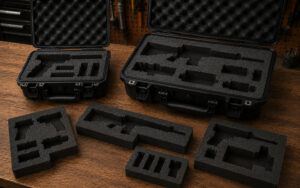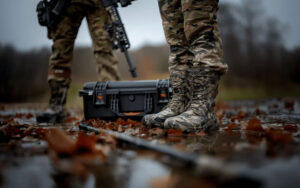
Yes, quality gun cases can protect against extreme temperatures when they are built with temperature-resistant materials and proper sealing systems.
Professional-grade hard cases are commonly designed to withstand temperatures ranging from: -40°C to +80°C.
These cases help protect firearms from:
- Thermal expansion
- Condensation
- Moisture buildup
- Material degradation
- Corrosion
However, not all gun cases provide the same level of thermal protection. Cheap plastic cases often fail in harsh conditions, while professional protective cases are engineered specifically for environmental stability.
Why are extreme temperatures dangerous for firearms?
Temperature extremes can quietly damage firearms over time, even when no visible issues appear immediately.
Cold temperatures
Extreme cold can cause:
- Metal contraction
- Brittle polymer components
- Cracking in wooden stocks
- Lubricant thickening
Very cold firearms moved into warm environments also develop condensation rapidly.
High temperatures
Excessive heat can lead to:
- Warping of plastic components
- Seal degradation
- Lubricant breakdown
- Thermal expansion in precision parts
Direct sunlight inside vehicles can push internal temperatures well beyond safe storage levels.
Rapid temperature changes
Repeated thermal cycling is often more damaging than steady temperatures.
This process causes:
- Expansion and contraction stress
- Moisture formation
- Long-term corrosion risks
How do quality gun cases protect against temperature changes?
Temperature-resistant shell materials
Professional cases use high-impact polymers such as:
- Polypropylene blends
- NK-7 resin
These materials maintain structural integrity across wide temperature ranges without becoming:
- Brittle in cold weather
- Soft in high heat
Pressure equalisation valves
Pressure valves help regulate internal air pressure during:
- Altitude changes
- Temperature shifts
This reduces condensation buildup inside the case while maintaining waterproof sealing.
Waterproof sealing systems
IP67-rated sealing systems prevent humid air and moisture from entering the case during environmental changes.
Good seals are critical because moisture is often the biggest threat to firearms during temperature swings.
Protective foam interiors
Quality foam helps stabilize firearms and reduce temperature shock by adding insulation between the firearm and external conditions.
What happens if condensation forms inside a gun case?
Condensation is one of the most common causes of firearm corrosion.
When cold firearms enter warm air, moisture condenses rapidly onto:
- Barrels
- Actions
- Triggers
- Optics
This moisture can begin causing corrosion within hours if not addressed.
Condensation problems are especially common when:
- Moving guns between outdoor winter conditions and heated buildings
- Transporting firearms in vehicles
- Flying between climates
How do you prevent condensation inside a gun case?
Allow gradual temperature adjustment
Do not immediately open a cold gun case in a warm room.
Allow the closed case to warm gradually before opening it.
Use desiccants
Silica gel packs or gun-safe desiccants help absorb excess moisture inside the case.
Choose cases with pressure valves
Pressure equalisation systems reduce moisture buildup caused by pressure and temperature changes.
Keep firearms dry before storage
Never store firearms while wet from:
- Rain
- Snow
- Condensation
Dry firearms thoroughly before sealing them inside cases.
Can hard gun cases stay inside hot vehicles?
Quality hard cases tolerate high temperatures better than soft cases, but prolonged heat exposure should still be avoided whenever possible.
Vehicle interiors can exceed 60°C during summer conditions.
Professional cases protect firearms from direct environmental exposure, but continuous extreme heat can still affect:
- Lubricants
- Optics
- Batteries
- Electronic accessories
Whenever possible:
- Store cases out of direct sunlight
- Use climate-controlled storage
- Avoid long-term vehicle storage
Do waterproof gun cases help with temperature protection?
Yes. Waterproof cases provide important secondary temperature protection because they:
- Reduce moisture intrusion
- Limit humidity fluctuations
- Create more stable internal environments
Cases with:
- IP67 ratings
- Pressure equalisation valves
- High-quality gasket systems
are especially effective in challenging environments.
What case materials work best in extreme temperatures?
Polypropylene and NK-7 resin
These materials provide:
- Excellent impact resistance
- Thermal stability
- UV resistance
- Chemical resistance
making them ideal for outdoor firearm transport.
Aluminum cases
Aluminum handles heat well but transfers temperature rapidly, which can increase condensation risk.
Cheap plastics
Low-grade plastics often:
- Warp in heat
- Crack in cold
- Lose seal integrity over time
making them poor choices for serious firearm protection.
Should you store gun cases in heated or unheated spaces?
Stable temperatures matter more than heated temperatures.
The ideal storage environment is:
- Cool
- Dry
- Consistent
Rapid temperature fluctuations create more problems than steady cold conditions.
A climate-controlled room is ideal, but quality protective cases help maintain safer internal conditions even in less controlled environments.
Are extreme-temperature gun cases worth the investment?
For valuable firearms, absolutely.
Professional-grade hard cases protect against:
- Rust
- Condensation
- Stock damage
- Optic failures
- Thermal stress
Repairing corrosion or replacing damaged optics often costs far more than investing in a properly engineered case.
If your firearms regularly experience:
- Outdoor use
- Vehicle transport
- Air travel
- Cold-weather hunting
- Hot climates
then a temperature-resistant hard case becomes an important part of long-term firearm protection.