The right DJI drone case size depends on:
- Your specific DJI drone model
- How many accessories you carry
- The level of protection you need
- How often you travel with the drone
Most DJI drones require hard cases with internal dimensions between 13 and 20 inches in length once you include:
- The drone
- Controller
- Batteries
- Chargers
- Cables
- Filters
- Propellers
What size case does each DJI drone usually need?
DJI Mini series
Models:
- DJI Mini 2
- DJI Mini 3
- DJI Mini 4 Pro
Folded drone dimensions are usually around:
- 5.5 × 3.5 × 2.5 inches
Recommended hard case interior size:
- 13–15 inches long
This typically provides enough room for:
- The drone
- RC controller
- 2–3 batteries
- Charging hub
DJI Air series
Models:
- DJI Air 2S
- DJI Air 3
Folded dimensions are usually around:
- 7.5 × 4 × 3.5 inches
Recommended hard case interior size:
- 15–18 inches long
The larger controller and extra batteries often require more internal width than Mini series drones.
DJI Mavic series
Models:
- DJI Mavic 3
- Mavic 3 Pro
- Mavic 2 Pro
Folded dimensions are usually around:
- 9 × 4 × 4 inches
Recommended hard case interior size:
- 18–20 inches long
These drones often include:
- Larger batteries
- ND filter kits
- Extra propellers
- Professional controllers
which increase case size requirements.
DJI Inspire series
Inspire drones require much larger transport cases because the landing gear and frame remain significantly larger even when collapsed.
Recommended case sizes commonly exceed:
- 24–30 inches long
Professional wheeled hard cases are normally preferred for these systems.
How much extra space should you leave inside a drone case?
You should leave approximately:
- 1–2 inches of foam protection around all sides
to provide:
- Impact absorption
- Shock protection
- Vibration reduction
Cases that fit too tightly can create pressure points that damage:
- Gimbals
- Cameras
- Propeller arms
Cases that are too large may allow equipment movement during transport.
What accessories increase the case size you need?
Many people underestimate how much space accessories require.
Common accessories include:
- Extra batteries
- Battery charging hubs
- RC controllers
- Tablets or phones
- ND filters
- Propellers
- Cables
- Landing pads
The controller is often one of the largest items after the drone itself.
Professional controllers with built-in screens require substantially more internal space.
Should you choose a soft case or hard case for a DJI drone?
Soft cases
Soft drone bags work well for:
- Casual travel
- Lightweight portability
- Short local trips
They offer:
- Basic scratch protection
- Light padding
but limited impact resistance.
Hard cases
Hard protective cases provide:
- Impact protection
- Waterproof sealing
- Dustproof protection
- Crush resistance
They are strongly recommended for:
- Professional use
- Air travel
- Outdoor environments
- Expensive drone setups
What case features matter most for DJI drones?
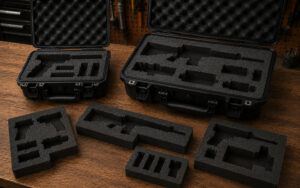
Custom foam inserts
Custom-cut foam prevents movement and protects:
- Gimbals
- Cameras
- Sensors
during transport.
IP67 waterproof protection
Waterproof hard cases help protect drones from:
- Rain
- Dust
- Moisture
- Outdoor conditions
Pressure equalisation valves
These valves are useful during:
- Air travel
- Altitude changes
because they balance pressure while maintaining waterproof seals.
Impact-resistant construction
High-quality hard cases use:
- Polypropylene blends
- NK-7 resin
to protect against drops and rough handling.
Should you buy a case designed specifically for your DJI model?
Model-specific cases offer:
- Perfect foam fitment
- Better organization
- Maximum protection
They are ideal if:
- You use one drone consistently
- You travel frequently
- You work professionally
Universal hard cases provide more flexibility for:
- Future drone upgrades
- Mixed equipment storage
- Changing setups
How do you choose the right DJI drone case size?
Start by measuring:
- Your folded drone
- Your controller
- Your batteries
- Your accessories
Then add:
- Foam clearance
- Accessory space
- Future expansion room
For most DJI drone owners:
- Mini series cases usually fall within 13–15 inches
- Air series cases usually require 15–18 inches
- Mavic series cases usually need 18–20 inches
If you transport expensive drone equipment regularly, a hard waterproof case with custom foam inserts is usually the safest long-term investment.