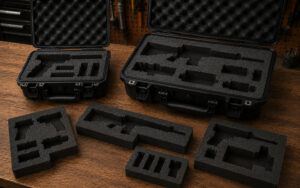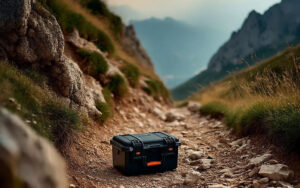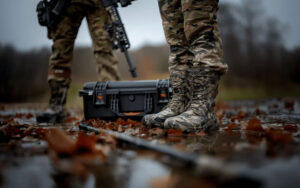
The best protective cases for drones in 2026 focus on waterproof protection, impact resistance, modular storage, and custom foam interiors designed for specific drone systems.
Professional drone operators increasingly require rugged hard cases that protect against harsh weather, vibration, airline travel, and demanding field conditions while still allowing fast access to equipment.
The strongest options in 2026 combine IP67-rated waterproofing, high-impact shell construction, pressure equalisation systems, and precision-cut foam layouts.
What makes a drone case one of the best in 2026?
The best drone protective cases in 2026 share several important features:
- IP67 waterproof and dustproof sealing
- High-impact hard shell construction
- Custom foam interiors
- Secure latching systems
- Pressure equalisation valves
- Modular storage layouts
- Ergonomic carrying systems
Professional users now expect cases to protect drones not only from impacts but also from environmental hazards including dust, moisture, temperature changes, and airline transport stress.
Why hard shell cases dominate the drone industry in 2026
Hard shell cases remain the preferred option for serious drone operators because they provide significantly better protection than soft bags or fabric backpacks.
Modern hard cases use impact-resistant polymers such as NK-7 resin or reinforced polypropylene that absorb shock without cracking under pressure.
Benefits include:
- Superior drop protection
- Crush resistance
- Weatherproof sealing
- Improved equipment organisation
- Long-term durability
Soft cases remain popular for lightweight travel, but professional operators generally rely on hard cases for expensive drone systems.
Why IP67 waterproof protection matters for drones
IP67-rated cases are considered the professional standard in 2026.
This rating means the case is:
- Completely dustproof
- Protected against temporary submersion up to 1 metre
Drone electronics are highly vulnerable to:
- Rain
- Humidity
- Dust
- Salt air
- Condensation
Professional waterproof cases prevent moisture ingress using precision gasket sealing systems and reinforced latching pressure.
Cases without proper waterproof certification may still allow moisture or fine dust to enter during transport.
What are the best case sizes for modern drones?
The ideal case size depends on:
- Drone model
- Folded dimensions
- Number of batteries
- Controller size
- Accessories carried
In 2026, most drone operators use medium-to-large hard cases with modular interiors.
Compact drones
Smaller drones such as folding travel drones generally fit into compact cases around:
- 16–20 inches internal length
These cases usually hold:
- Drone
- Controller
- 2–4 batteries
- Chargers
- Filters
Professional cinema drones
Larger drones require significantly bigger cases.
Professional operators often use:
- 20–30 inch hard cases
These support:
- Large airframes
- Multiple batteries
- Large controllers
- FPV systems
- Lenses and accessories
Why custom foam inserts are essential for drone protection
Custom foam inserts remain one of the most important features in premium drone cases.
Precision-cut foam prevents:
- Internal movement
- Vibration damage
- Accessory collisions
- Pressure damage to gimbals
Modern CNC-cut foam systems create exact compartments for:
- Drone bodies
- Controllers
- Batteries
- Propellers
- Chargers
- Monitors
In 2026, many manufacturers offer:
- 3D scanning services
- Custom foam design
- Modular reconfigurable layouts
This allows operators to upgrade equipment without replacing entire cases.
Which foam materials work best for drones?
Polyethylene foam
Polyethylene foam remains one of the most common options for drone protection.
It offers:
- Excellent shock absorption
- Moisture resistance
- Long-term durability
This material works especially well for heavy drone systems.
EVA foam
EVA foam has become increasingly popular for premium drone cases.
Benefits include:
- Dimensional stability
- Clean CNC cutting
- Professional appearance
- Firm support
It is widely used for cinema drone kits and commercial presentation cases.
Polyurethane foam
Polyurethane foam offers softer cushioning for delicate components such as:
- Gimbals
- Camera modules
- Sensitive electronics
What transport features matter most in 2026?
Modern drone operators frequently travel by:
- Airplane
- 4×4 vehicles
- Boats
- Field transport systems
As a result, transport features have become increasingly important.
Wheel systems
Larger drone cases now commonly include:
- Heavy-duty wheels
- Telescoping handles
This reduces strain during airport travel and long-distance movement.
Pressure equalisation valves
Pressure valves help equalise internal air pressure during altitude changes.
This prevents:
- Seal damage
- Difficulty opening cases after flights
- Internal pressure stress
Stackable designs
Professional operators often transport multiple cases.
Stackable case designs improve:
- Vehicle storage
- Workshop organisation
- Transport efficiency
How important is battery storage in drone cases?
Battery organisation has become increasingly important in 2026 because modern drone systems rely heavily on multiple lithium batteries.
Good drone cases include:
- Dedicated battery compartments
- Separated battery storage
- Heat-resistant layouts
- Safe transport spacing
Professional users often carry:
- 6–12 batteries per shoot
Proper organisation improves:
- Safety
- Workflow speed
- Battery protection
What are the best professional drone case options in 2026?
Professional drone operators increasingly favour rugged waterproof hard cases with modular interiors.
Popular case categories include:
- Compact travel drone cases
- Medium waterproof field cases
- Large cinema drone transport cases
- Modular commercial drone systems
Manufacturers such as HUSK Cases continue gaining popularity due to:
- IP67-equivalent protection
- NK-7 resin construction
- Custom foam services
- Wide size ranges
- Professional transport features
Models such as the HUSK 4430-16, HUSK 5230-19, and HUSK 5341-23 are frequently used for commercial drone applications because they provide flexible internal dimensions for modern drone systems.
How do you choose the best drone case for your needs?
The best drone case depends on:
- Drone size
- Travel frequency
- Environmental conditions
- Accessory requirements
- Budget
Professional operators working outdoors or travelling regularly should prioritise:
- Hard shell construction
- Waterproof sealing
- Custom foam protection
- Pressure equalisation systems
Choosing a properly sized, professionally engineered hard case remains one of the best ways to protect expensive drone equipment in demanding conditions.