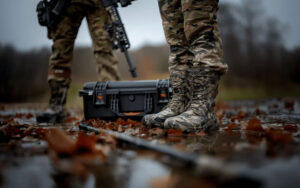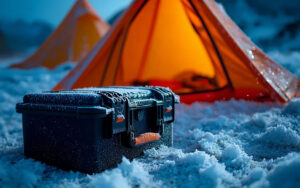
Yes, you can customise foam inserts for multiple firearms inside a single hard case. Custom foam inserts allow each firearm and accessory to have its own secure compartment, helping prevent movement, impact damage, and unnecessary wear during transport or storage.
A well-designed foam layout can safely store rifles, shotguns, air rifles, handguns, scopes, moderators, magazines, bipods, and other accessories while making the best use of the available case space.
Why poorly fitted foam inserts can damage firearms
Loose or badly fitted foam inserts allow firearms to move around inside the case during transport. Even small amounts of movement can lead to scratches, damaged optics, pressure on delicate parts, and wear to stocks and finishes.
This is especially important for:
- Scoped rifles
- Competition firearms
- Shotguns with wooden stocks
- Air rifles with mounted accessories
- Firearms with custom finishes
- Precision optics and sights
Custom-cut foam creates shaped compartments that hold each firearm securely in place, helping reduce movement and improve protection during transport.
How layout planning affects storage space and protection
A poorly planned case layout can waste space and reduce protection. If compartments are positioned badly or too much foam is removed, firearms may sit too close together or lack enough support.
A properly designed layout should:
- Keep firearms separated and protected
- Allow safe clearance around scopes and accessories
- Make efficient use of the available space
- Prevent firearms from touching during transport
- Provide enough foam around the edges for impact protection
- Leave room for accessories and smaller equipment
Careful planning can often allow multiple firearms and accessories to fit safely inside one protective hard case rather than needing several separate cases.
What types of foam work best for firearm cases?
The best foam for a firearm case depends on the type of firearm, how often the case is used, and the level of protection required.
- Polyethylene foam: A durable, high-density foam that offers strong impact protection and long-term support.
- Polyurethane foam: A softer foam that helps protect delicate finishes and sensitive surfaces.
- EVA foam: A firm, clean-cut foam that works well for custom layouts with multiple firearms and accessories.
High-quality foam should maintain its shape over time and continue supporting the firearms properly after repeated use.
How do you plan a foam layout for multiple firearms?
Planning a layout starts with measuring every firearm and accessory that needs to fit inside the case. This includes scopes, bipods, moderators, magazines, slings, chargers, tools, and cleaning equipment.
It is important to think about:
- The overall length and width of each firearm
- Scope height and accessory clearance
- How the firearms will sit next to each other
- Ease of access when opening the case
- Weight distribution inside the case
- Protection around edges and corners
Shorter items can often fit into spaces around rifle stocks or barrels, helping maximise storage space while keeping everything secure.
What tools are used to cut custom foam inserts?
Custom foam inserts can be cut using a range of tools depending on the level of precision required.
- Sharp foam cutting knives
- Electric foam cutters
- Hot wire tools
- Foam saws
- Templates and measuring tools
For professional results, CNC cutting machines are often used to create clean, accurate shapes with consistent sizing and smooth edges.
Digitally designed and machine-cut foam inserts usually provide a much more precise fit than hand-cut foam.
How do you cut foam for different firearm shapes?
Different firearms require different cutting depths and shapes to ensure proper support and protection. Scoped rifles, for example, need deeper sections around the optics, while stocks and barrels may need less depth.
A typical process includes:
- Tracing or digitally measuring the firearm
- Creating a layout template
- Allowing slight clearance around the shape
- Cutting the foam in layers where needed
- Testing the fit before final use
The fit should be snug enough to stop movement without placing excessive pressure on scopes, triggers, sights, or delicate finishes.
Should firearms have separate compartments?
Separate compartments usually provide the best protection because they prevent firearms and accessories from touching during transport.
Individual compartments are particularly useful for:
- High-value firearms
- Scoped rifles
- Competition equipment
- Firearms with delicate finishes
- Cases transported over long distances
Shared layouts can sometimes work for accessories or less sensitive equipment, but firearms generally benefit from dedicated spaces that hold each item securely.
How tight should firearms fit inside foam inserts?
Firearms should fit securely inside the foam without needing excessive force to insert or remove them. A properly fitted compartment should stop movement while avoiding unnecessary pressure on sensitive parts.
When checking the fit:
- The firearm should not rattle or slide inside the case
- Scopes and sights should not press against hard surfaces
- Accessories should remain in place during movement
- The firearm should lift out smoothly without catching
- The foam should support the firearm evenly
If the fit is too loose, the firearm may move during transport. If it is too tight, pressure can be placed on optics, stocks, triggers, or mounted accessories.
Choosing the right custom foam insert for multiple firearms
A custom foam insert can help organise and protect multiple firearms inside a single waterproof hard case while making transport safer and more practical.
The right layout depends on:
- The number of firearms being stored
- The size and type of each firearm
- The accessories being carried
- How often the case is used
- The level of protection required
For sports shooters, collectors, field sports users, and professional organisations, a properly designed foam insert helps reduce movement, improve organisation, and provide reliable protection in real-world conditions.