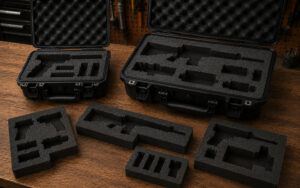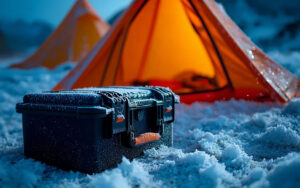
Firearms can shift inside cases during transport when the interior support is too loose, poorly shaped, or not designed around the specific firearm and accessories. The best way to prevent movement is to use custom-fitted foam inserts or a properly designed divider system that holds each item securely in place.
A well-fitted case interior helps protect licensed firearms, shotguns, rifles, air rifles, scopes, moderators, magazines, tools, and accessories from knocks, vibration, and surface damage during travel or storage.
Why secure firearm storage matters during transport
When a firearm moves around inside a case, even small amounts of movement can cause damage over time. Scopes can lose zero, stocks and finishes can become marked, and accessories can knock against each other inside the case.
This is especially important for:
- Shotguns and rifles with fitted optics
- Air rifles and air pistols
- Competition firearms
- Hunting and stalking rifles
- Firearms with wooden stocks or delicate finishes
- Scopes, moderators, bipods, and other accessories
A secure interior helps keep everything in position, reducing the risk of damage during car journeys, range visits, competitions, field sports, or professional transport.
What does rattling inside a gun case mean?
Rattling inside a gun case usually means the case interior is not supporting the firearm properly. If you can hear movement when the case is lifted or carried, the firearm or accessories may be moving against the case walls or against each other.
This can lead to:
- Scratches and marks on the finish
- Damage to scopes or mounts
- Movement of smaller accessories
- Pressure on triggers, barrels, or stocks
- Reduced protection from knocks and vibration
A properly fitted foam insert should hold each item firmly enough to prevent movement, while still allowing the firearm to be removed without force.
Why do firearms shift in cases during transport?
Firearms usually shift in cases because the internal compartments are too large, too shallow, or not shaped around the specific firearm. Standard foam, loose padding, or generic case interiors may not provide enough support for items with scopes, bipods, moderators, or other attachments.
Movement can also be caused by:
- Vehicle vibration during travel
- Sudden braking or changes in direction
- Cases being lifted, carried, or stacked
- Accessories being stored loose inside the case
- Foam becoming compressed after repeated use
- Temperature changes affecting the fit of the foam
Custom foam inserts help solve this by creating a shaped space for each item, so the firearm and accessories are supported in the right places.
What type of foam prevents firearms from moving in cases?
High-density foam is commonly used to prevent firearms from moving inside protective cases. The best foam type depends on the firearm, how often the case is used, and how much protection is needed.
- High-density polyethylene foam: A strong, durable option that resists compression and provides long-term support.
- Polyurethane foam: A softer option that can help protect delicate finishes and irregular shapes.
- EVA foam: A firm, clean-cut material that works well for custom layouts with multiple firearms and accessories.
For the best protection, the foam should be cut to the exact shape of the firearm and any fitted accessories. This helps prevent movement while avoiding unnecessary pressure on sensitive areas.
How do you create custom foam inserts for firearms?
Creating custom foam inserts starts with accurately measuring the firearm and any accessories that need to sit in the case. This may include scopes, mounts, moderators, bipods, magazines, cleaning equipment, and tools.
The layout should allow enough space between each item so they do not touch during transport. It should also make the case easy to use, with finger cut-outs or access points where needed.
A good custom foam insert should:
- Hold each item securely in place
- Support the firearm without putting pressure on delicate parts
- Protect scopes, sights, and accessories
- Make good use of the available case space
- Allow items to be removed without forcing them out
- Maintain its shape after repeated use
Professional custom foam services often use digital design, scanning, or CNC cutting to create accurate inserts with clean edges and a precise fit.
What are the alternatives to foam inserts?
Foam inserts are one of the most secure options, but they are not the only way to prevent movement inside a firearm case. The best choice depends on how often the layout needs to change.
- Modular dividers: Useful for cases that need to be reconfigured for different firearms or accessories.
- Padded sleeves: Helpful for protecting individual items inside a larger case.
- Combination interiors: Foam bases with removable dividers or accessory compartments.
- Retention straps: Adjustable straps that help hold firearms in place during transport.
Modular systems can be useful when flexibility matters, but custom foam usually provides a closer fit and better movement control.
How tight should firearms fit inside case compartments?
Firearms should fit snugly inside case compartments, with enough contact to stop movement but not so much pressure that the item has to be forced in or out.
A good fit should feel secure and controlled. The firearm should not rattle, slide, or lift out of position when the case is moved. At the same time, there should be enough clearance around scopes, triggers, sights, and other sensitive areas.
To check the fit:
- Close the case and gently move it from side to side
- Listen for rattling or movement
- Check that accessories stay in their compartments
- Make sure scopes and sights are not pressed against hard edges
- Confirm that items can be removed without excessive force
For firearms used regularly, a slightly easier fit may be more practical. For long-term storage or transport over longer distances, a firmer fit may offer better protection.
Choosing the right case interior for firearms
The right case interior should match the firearm, the accessories, and the way the case will be used. A rifle with a scope needs different support from a shotgun, an air rifle, or a case holding multiple accessories.
Custom-fitted foam is often the best option when security, presentation, and protection are important. It helps stop movement, keeps accessories organised, and reduces the risk of damage during transport.
For licensed firearm owners, sports shooters, field sports users, and professional organisations, a properly fitted hard case is not just about neat storage. It is an important part of protecting valuable equipment in real-world conditions.